North Country Handymen: One System to Run the Whole Business
Quantify built North Country Handymen a Core Business Platform, one system that runs the whole operation, reclaiming 12 to 15 hours a week and consolidating scattered tools onto a single platform.
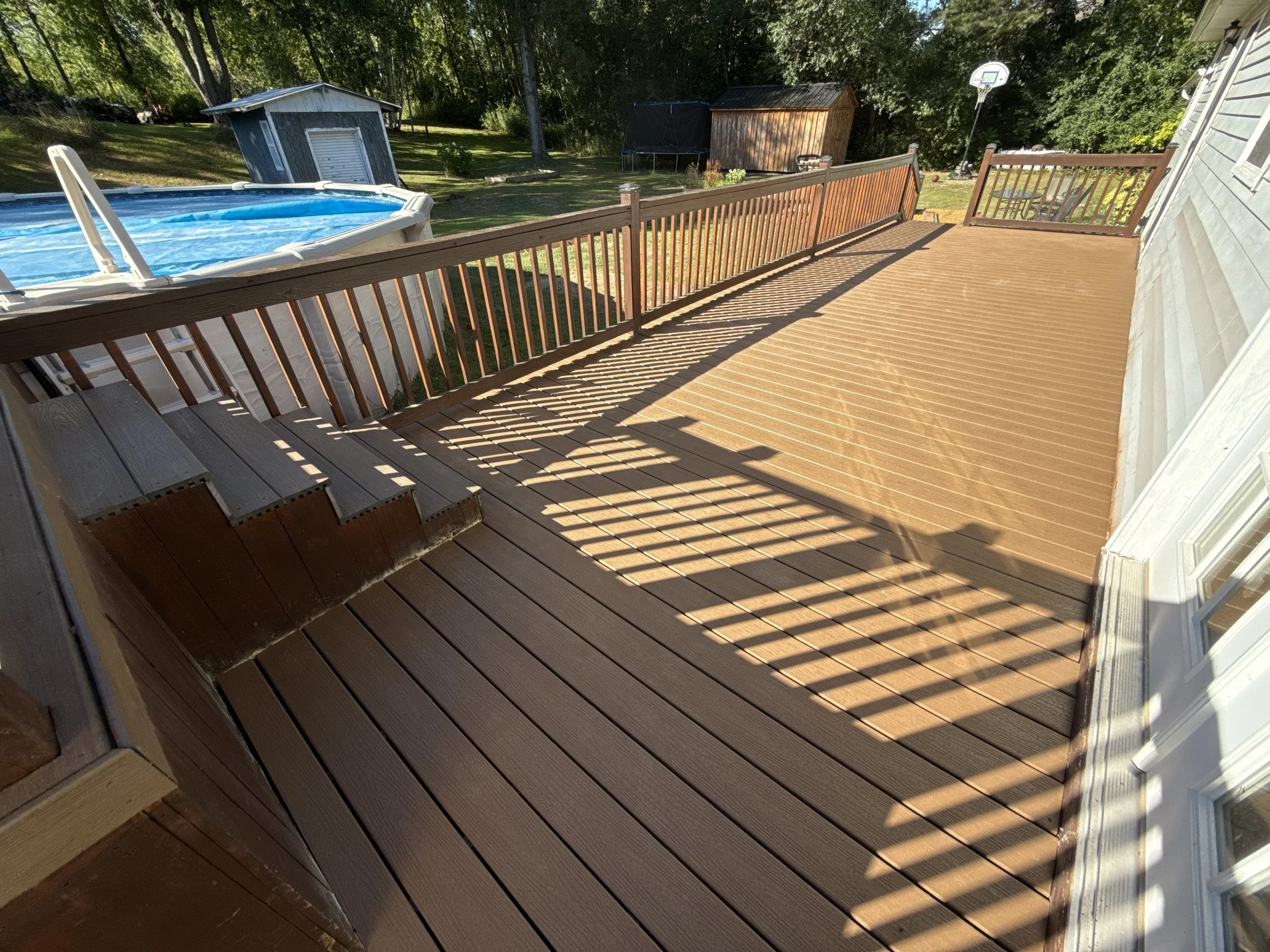
North Country Handymen does it all: foundations, framing, finish work, electrical, plumbing, and heating for clients across upstate New York. As the business grew, founder and CEO Corwin Christman found himself spending more time on the paperwork around the work than on the work itself. Over the past year and a half, Quantify built him a Core Business Platform: one system that runs the business, built around how he already works. This is the whole story, from automating the busywork to consolidating the entire operation onto a single platform.
The challenge
Corwin was losing 12 to 15 hours every week to the same recurring tasks: invoicing, onboarding customers, entering the same information by hand in several places, and tracking every project from beginning to end. None of it was the skilled trade work the company was built on. It was the administrative drag that piles up when a hands-on business scales without a system underneath it.
The way most contractors still operate makes the problem clear. A call comes in, you write it down, you schedule a visit, you gather the details, you write those down, then you re-enter everything into QuickBooks to build an estimate, and finally you send it. The same information gets keyed in several times, in several places. Without automation, Corwin estimates he would have to dedicate half his time to paperwork, and at his current volume that math does not work.
There is a hidden cost on top of the lost hours. Bidding is a numbers game. Not every bid closes, so the more bids Corwin can turn around, the more work he wins. When paperwork caps how many projects he can process, every bid he cannot get to is revenue he never sees. His ability to handle a high volume of incoming requests is the engine of the business.
Redesigning the processes of a company that is already running is never effortless. Corwin was candid that changing how an operating business works is not a perfectly smooth process, which made trust and communication central to the engagement.
What we built
Quantify mapped how North Country Handymen actually runs, then rebuilt it as a Core Business Platform in two parts.
First, the spine and the wiring. We built the job tracking system to match Corwin’s real workflow, then automated the manual steps around it. Today the whole thing starts from a single intake form. Once a customer fills it out, the information flows to five places at once: it lands in QuickBooks, notifies Corwin that an intake came in, populates Google Docs, sends an email, and generates the project folders. The five or six steps Corwin used to handle by hand for every job now happen on their own. As a job moves through the pipeline, the platform also fires the internal and external text messages, DocuSign requests, and QuickBooks actions that used to be manual.
Then, the platform. Over the past couple of months we moved the operation onto Airtable, giving Corwin one place to see and work with his data. Airtable lets him get to his information far faster, and it is becoming the single source of truth as more of his data moves off the scattered apps he never liked using. The migration is deliberately incremental, one layer at a time, so the business keeps running while it consolidates. Corwin’s own goal is to pull the rest of his information into Airtable so everything he needs lives in one app.
Throughout, our priority was making Corwin’s concerns our concerns, so the final system reflects what is actually best for his business rather than a one-size-fits-all template. That is the difference between a Core Business Platform and off-the-shelf software: the platform bends to how he operates, not the other way around.
The platform earns its keep in two ways at once, and Corwin is clear that you need both. On one side, every piece of data he needs to run the business lives in one place, so he can answer questions like how much profit a job made without a week of digging. On the other, the automations simply happen: handoffs, approvals, documents, signatures, and reminders fire without anyone touching them.
"You have to have both in order for it to work the way that it works for me."
There is one more thing that makes it stick: Corwin does not have to understand any of it. He does not want to know how a trigger sends a DocuSign when a record moves from one stage to the next. He just needs to know it is happening, and to know who to call on the rare occasion it is not. Quantify monitors the platform and stays on for support, so a missed trigger is a quick fix rather than an emergency, and the system never lives or dies by one person’s memory.
The outcome
The 12 to 15 hours a week that used to vanish into administrative work are back in Corwin’s schedule. Because the platform lets him turn around far more bids, he closes more of them, so the same effort wins more work. And with his data consolidating into one place, he has stopped hunting for the same information across email, texts, paper, and apps that do not talk to each other. Asked whether he would ever go back to the old way, his answer was flat: he never will.
North Country Handymen was the first business to run on what Quantify now calls the Core Business Platform. Corwin is convinced enough that he says he could go sell it to every business in the area himself, because he knows firsthand what getting that time back is worth.
"If you want to scale in any way, shape, or form, it's a game changer. You can't afford not to do it."